End-of-Life Support
Compassionate Support for the End-of-Life Journey
We provide gentle, non-medical in-home caregiving support for older adults during this time, and steady, practical help for the families around them. Support is shaped around comfort, dignity and familiar surroundings, and can complement care from an existing hospice or healthcare team. We're proud to serve families across the San Fernando Valley.
- A calm, respectful presence
- Support that fits around your family
- Serving the San Fernando Valley
What Is End-of-Life Support?
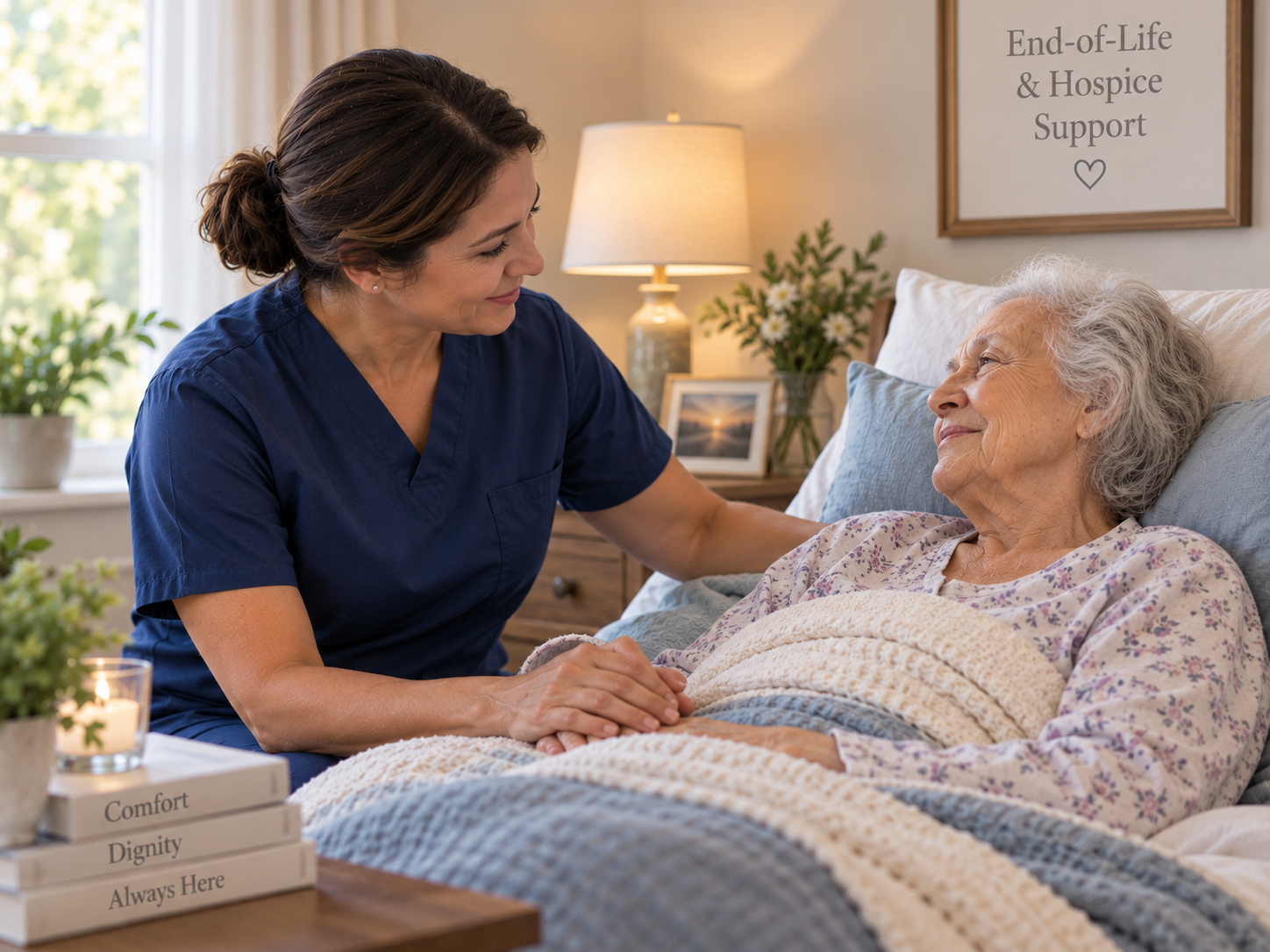
End-of-life caregiving support is non-medical, in-home assistance that helps an older adult remain comfortable, supported and surrounded by familiar people and routines during this time. It centers on presence, dignity, companionship and appropriate everyday support, for the individual and for the family around them.
This is different from hospice care itself. Hospice is a specialized medical service, typically provided by a dedicated hospice or healthcare team, focused on clinical and medical needs. Peaceful Home Care provides in-home caregiving support that can complement the care an individual already receives from their hospice or healthcare team; it doesn't replace it.
Support for a Time That Calls for Compassion
This is a period that asks for patience, presence and respect, both for the person receiving care and for the family around them. Our role is to help with the everyday and to be there, not to manage the medical side of care.
Any medical questions, changes in condition, or symptom concerns should always go to the hospice team or healthcare provider already involved in care.
At home
A Familiar Place. A Gentle Presence.
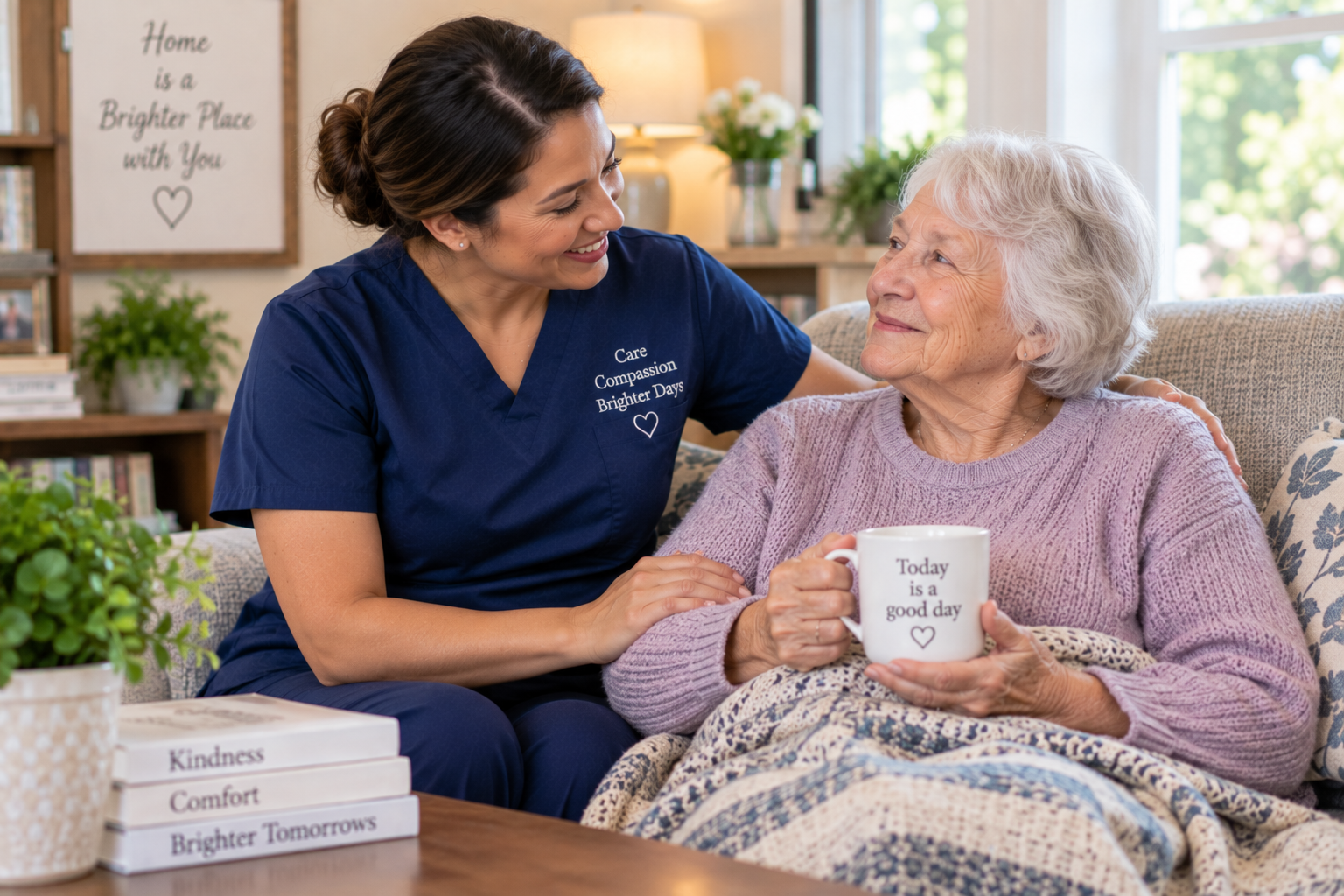
For families who choose to receive care at home, staying surrounded by familiar belongings, routines and people can matter a great deal. In-home caregiving support is built around protecting that familiarity.
-
Respectful assistance
Help offered with patience, never rushed.
-
Familiar routines
The parts of the day that already feel normal, kept as consistent as possible.
-
Personal preferences
How they like things done, respected throughout.
-
A calm environment
A quiet, steady presence rather than constant activity.
Presence matters
Sometimes, Being There Is the Most Important Thing
Much of what matters during this time isn't a task on a list. It's simply being present, in whatever way feels right.
-
Sitting together
Quiet company, without needing to fill every silence.
-
Conversation and shared memories
Talking, listening, or reminiscing together.
-
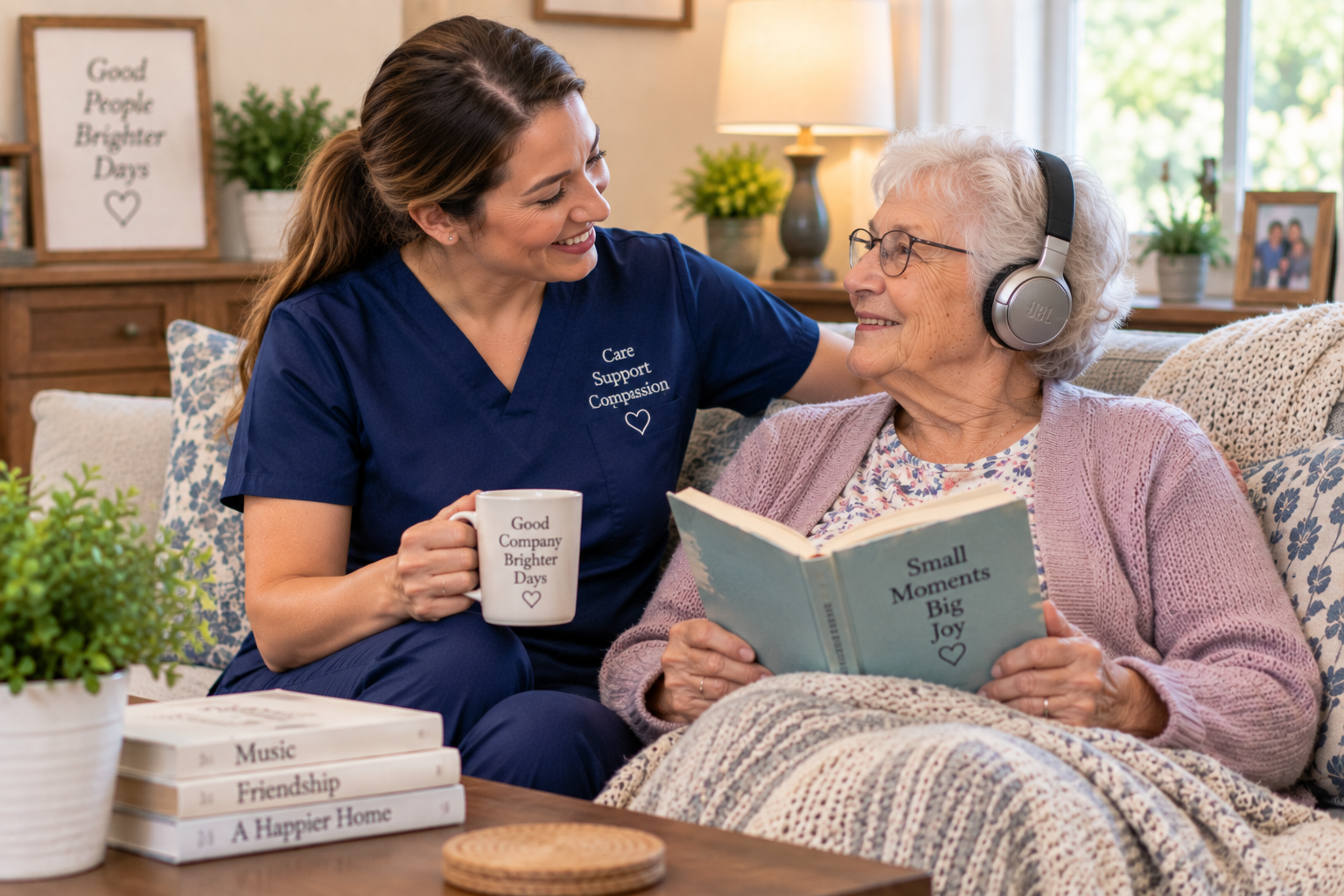
Reading or music
Simple, familiar activities that can bring comfort.
-
A reassuring presence
Someone attentive nearby, without being intrusive.
Everyday support
Support With the Everyday Moments
Depending on the individual's care plan, everyday caregiving support may include:
-
Personal care assistance
Appropriate help with personal care needs when it's part of the care plan.
-
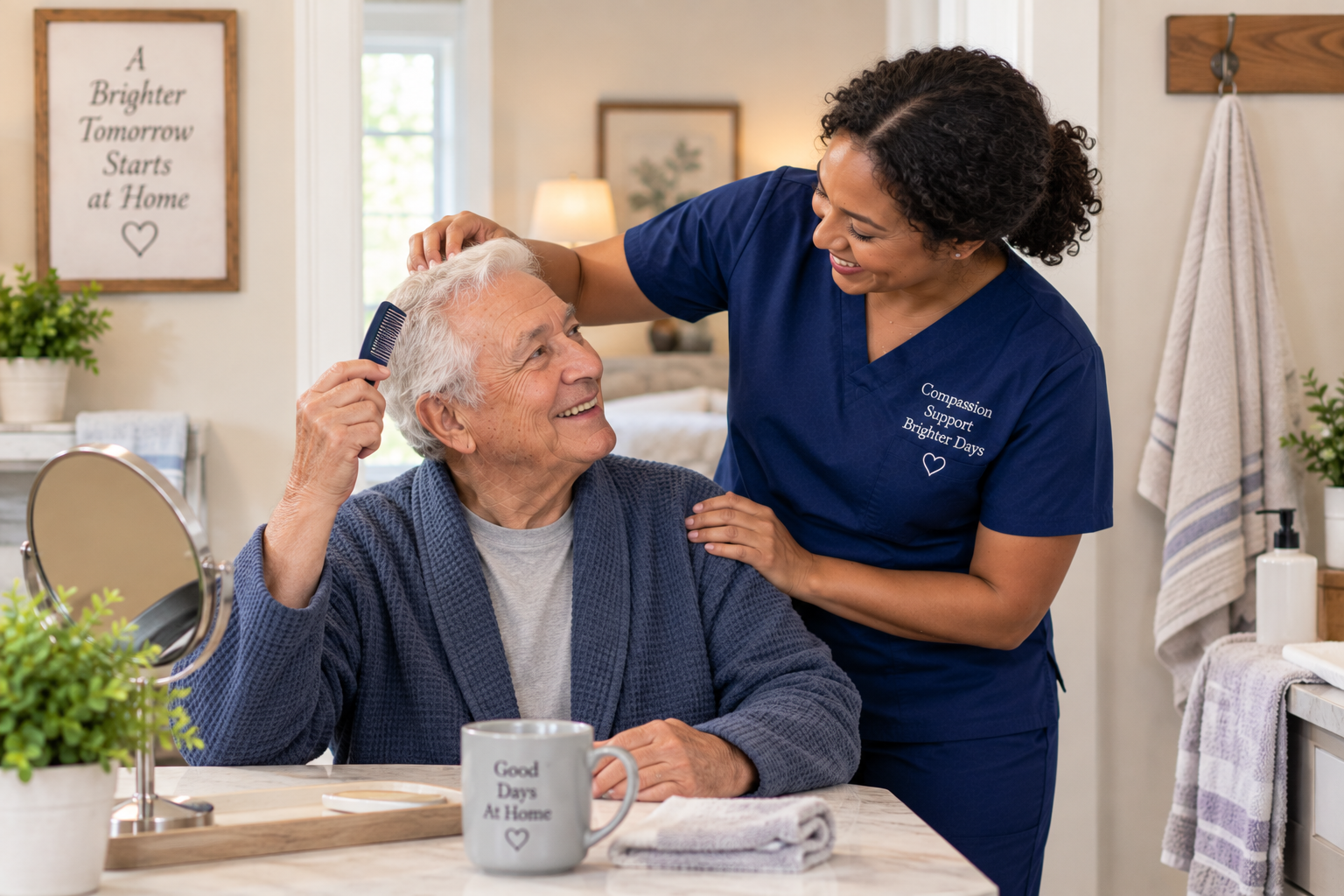
Dressing and grooming
Help with the parts of the day that are harder to manage alone.
-
Meal-related support
Help with appropriate meals and mealtime routines.
-
Light household assistance
Keeping the home comfortable and manageable.
-
Family assistance
Practical help so family members can focus on being present.
For families
Care for Your Loved One. Support for Your Family.
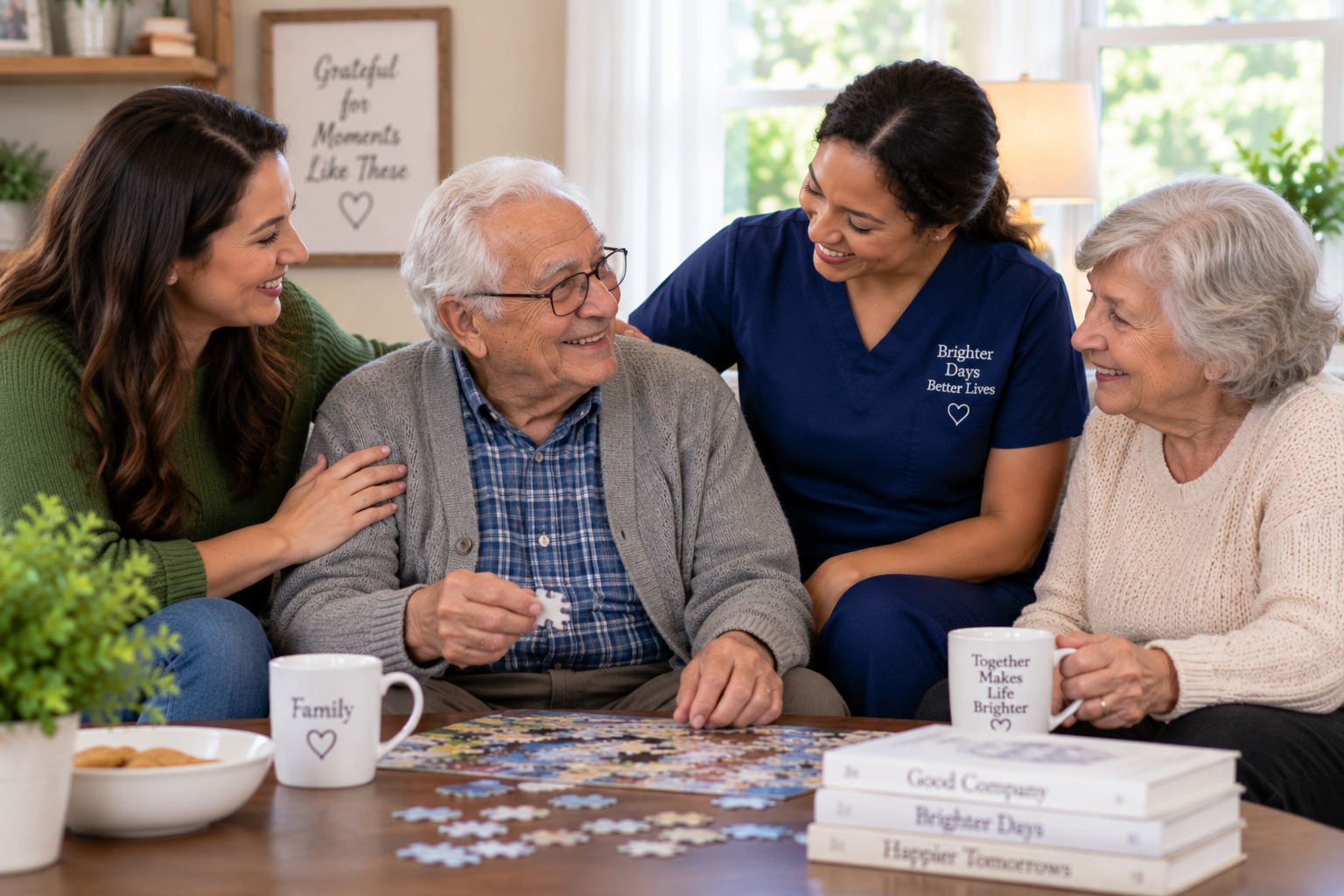
This time can be emotionally and practically demanding for the people around your loved one, too. Additional in-home caregiving support can help with the everyday, so family members can focus on being present.
-
Additional caregiving support
Extra hands for the tasks that add up.
-
Time to step away briefly
A moment to rest, without your loved one being alone.
-
Help with everyday tasks
Practical support that frees up time and attention.
-
Respect for family routines
Support that fits around how your family already does things.
How the two work together
Support That Can Work Alongside the Care Team
In-home caregiving and hospice care serve different purposes. Understanding the difference can help families know what to expect from each.
In-Home Caregiving Support
- Companionship
- Personal care
- Everyday routines
- Meal-related assistance
- Light household support
- Family support
Hospice / Healthcare Team
- Medical care
- Clinical assessment
- Symptom management
- Medical treatment
- Medication management, where applicable
- Other clinical services
Peaceful Home Care provides the caregiving support on the left. Medical and clinical care remains the responsibility of the hospice or healthcare team already involved, and any medical questions should go to them directly.
Personalized support
Care That Respects the Individual
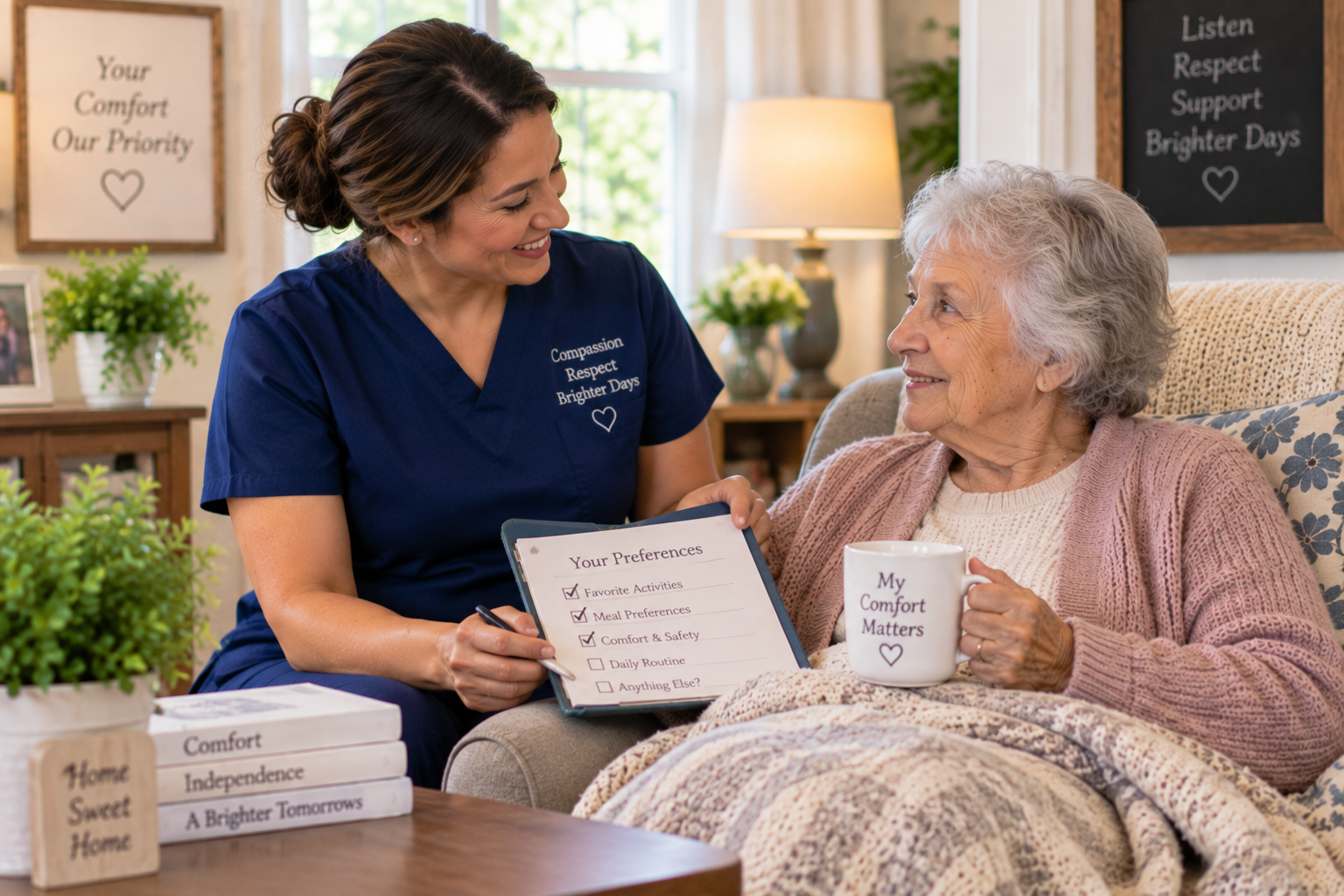
Every person and family carries different preferences, routines and priorities into this time. Support is shaped around those, not a fixed program.
Personal preferences
What they like, what they'd rather skip, and how they like things done.
Familiar routines
The parts of the day that already feel normal, kept consistent where possible.
Family involvement
How much your family wants to be part of day-to-day care.
Daily support needs
What's actually needed right now, and how that might change.
Desired level of companionship
Quiet presence or active conversation, whichever fits.
Individual dignity
Respect for who they are, not just what they need help with.
When to reach out
When Families May Need an Extra Pair of Hands
There's no single moment that makes this decision obvious. Any of these might be worth a conversation.
A family member can't be present all day
Work, distance or other responsibilities make constant presence difficult.
Caregiving responsibilities are hard to balance
The load has grown, and support would help spread it out.
More companionship is needed
Someone there beyond what family can manage alone.
Everyday personal care needs extra help
Daily tasks have become harder to manage without support.
Time is needed for other responsibilities
Work, appointments, or other family members need attention too.
You want support while staying involved
Extra hands, without stepping back from being there.
Who we support
Who We Support
In-home caregiving support during this time may be appropriate for a range of families, including:
-
Older adults receiving end-of-life care at home
Support built around comfort, familiarity and daily dignity.
-
Individuals receiving hospice care at home
Where additional caregiving support is appropriate alongside the hospice team.
-
Families caring for a loved one with advanced illness
Extra support for the everyday, alongside medical care already in place.
-
Family caregivers who need additional support
An extra set of hands for a demanding time.
-
Adult children coordinating care for a parent
Often managing logistics while trying to stay present emotionally.
-
Families seeking compassionate assistance during a difficult transition
Support during a time that asks a lot of everyone involved.
What support can include
What Support May Look Like
Depending on the individual's care plan, support may include:
Comfort & Companionship
A calm, reassuring presence and meaningful time together.
Personal Care
Appropriate assistance with personal care needs based on the care plan.
Daily Routines
Support with familiar everyday activities.
Meal-Related Support
Help with appropriate meal routines and light household tasks.
Family Support
Additional caregiving assistance when family members need time away.
Dignity & Respect
Care that respects individual preferences, routines and personal dignity.
Why families choose us
Why choose Peaceful Home Care for end-of-life support
This is a time that asks a family to trust someone with something deeply personal. Here's how we try to earn that trust.
Experienced, trained caregivers
Chosen for patience and good judgment, and trained for the realities of this kind of support.
Personalized in-home support
Care shaped around the individual and family's needs, not a fixed template.
Family-focused care
Families remain an important part of the caregiving experience throughout.
Open communication
A family-oriented approach that values clear communication and trust.
Local to the San Fernando Valley
We work in the neighborhoods our clients live in, which keeps care consistent and caregivers close by.
Compassion & respect
A calm, respectful approach centered on dignity, in every visit.
Getting started
How in-home support gets set up
Nothing about the first conversation commits you to anything. It's a chance to talk through whether additional support is the right fit.
-
Start the conversation
Contact us and share what kind of support your family is looking for.
-
Understand your needs
We discuss the individual's routines, preferences, caregiving needs and family priorities.
-
Plan personalized support
We shape an approach based on the individual's needs and the services available.
-
Begin care
Move forward with respectful, compassionate support at home.
Service area
End-of-Life Support in the San Fernando Valley
We provide in-home caregiving support to families throughout the San Fernando Valley, with a particular focus on the communities closest to us. If your family is navigating this time near Sherman Oaks, in Encino or around Studio City, we're happy to talk through what support could look like.
Not sure if your neighborhood is covered? Just ask. It only takes a minute to find out.
Other ways we support families
Questions families ask
End-of-life support questions, answered
If your question isn't here, just ask. We're happy to talk it through.
End-of-life care refers to the support provided to someone during a serious, advanced or terminal illness. It can include medical care from a healthcare or hospice team, along with non-medical, in-home caregiving support focused on comfort, dignity, companionship and everyday assistance.
Hospice care is a specialized medical service focused on comfort and quality of life for someone with a serious illness, typically provided by a dedicated hospice team of medical professionals. It's a distinct service from the in-home caregiving support Peaceful Home Care provides.
Hospice care is medical: it includes clinical assessment, symptom management, and medical treatment provided by a hospice or healthcare team. In-home caregiving is non-medical: it includes companionship, personal care, daily routines and family support. The two can work alongside each other.
Yes, in many cases. In-home caregiving support can complement the medical care provided by a hospice or healthcare team, depending on the individual's needs and existing care arrangement.
Depending on the individual's care plan, a caregiver can help with companionship, personal care, daily routines, meal-related support, light household tasks, and support for family members.
Yes. Companionship, including conversation, quiet presence, and shared activities like reading or music, is a core part of this kind of support.
Yes, when it's part of the agreed care plan. Personal care support depends on the individual's needs and what's been discussed ahead of time.
Yes. Additional in-home caregiving support can give family members time to step away briefly or attend to other responsibilities, while their loved one continues to receive attentive care.
No. Peaceful Home Care provides non-medical, in-home caregiving support. Medical hospice services, including clinical care and symptom management, remain the responsibility of the hospice or healthcare team involved in an individual's care.
Start with a free consultation. Tell us about your family's situation and what kind of support would help, and we'll talk through what in-home caregiving support could look like.
Next step
You Don't Have to Navigate This Time Alone.
Whatever your family is facing right now, having someone to talk it through with can help. Tell us about your situation, and we'll help you think about what kind of support might be useful.
Serving families throughout the San Fernando Valley.